




About
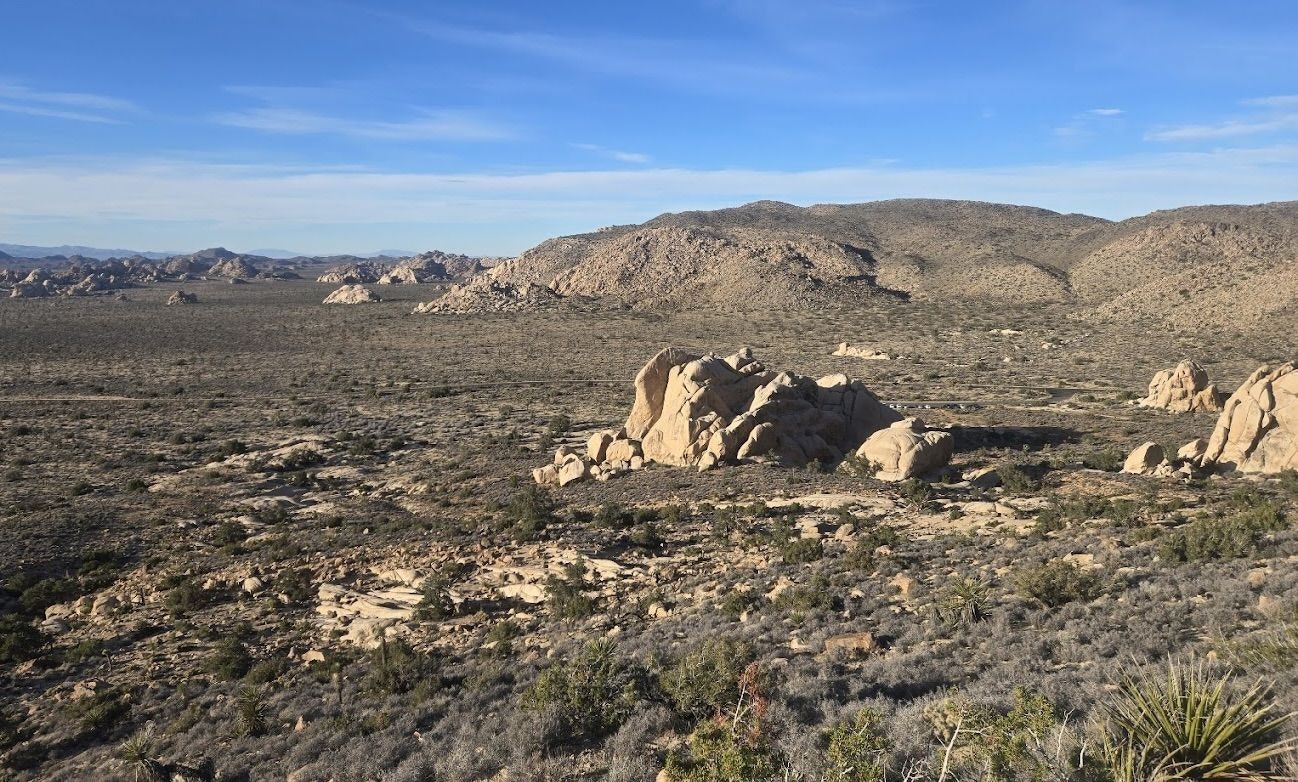
Two distinct desert ecosystems await your discovery at the renowned Joshua Tree National Park. Here, strong winds, unpredictable rains, and extreme temperatures are the norm.
The park is where the Mojave and Colorado Deserts converge, with the Pinto people being the first inhabitants over 5,000 years ago. Later, the Serrano, Cahuilla, and Chemehuevi peoples lived here, utilizing the area's resources for food, medicine, and tools. When you visit, you can still see the rock art and artifacts that tell their stories.
In the late 19th and early 20th centuries, cattle ranchers and gold miners arrived. This influx brought significant changes to the ecosystem. Settlers burned cacti to clear land for cattle, and they diverted water sources.
As concern for the desert's fragile environment grew, Pasadena resident Minerva Hoyt became a passionate advocate for its protection. Her tireless efforts led to the establishment of Joshua Tree National Monument in 1936 by President Franklin D. Roosevelt.
However, the area didn't gain national park status until1994 when it became part of the California Desert Protection Act. This designation provided greater protection for its nearly 800,000 acres, preserving its biological diversity and cultural heritage for all to experience.
Since the National Park is only about an hour east of Palm Springs, you could combine another attraction on the same day. Consider visiting Joshua Tree, followed by a trek at Indian Canyons or Andreas Canyon Trailhead.
No matter how you configure your sightseeing agenda, one thing is certain: Joshua Tree National Park should be at the top!
Joshua Tree National Park: Fun Facts & Cool Features
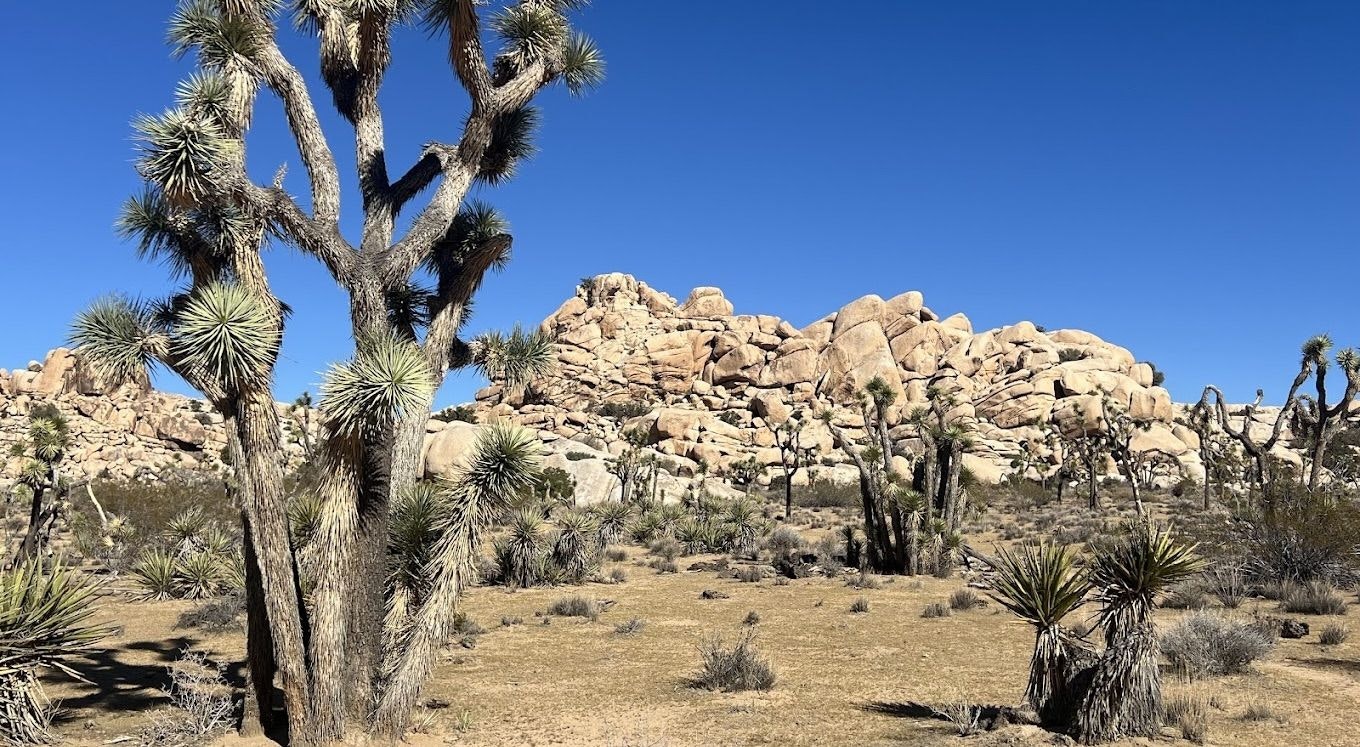
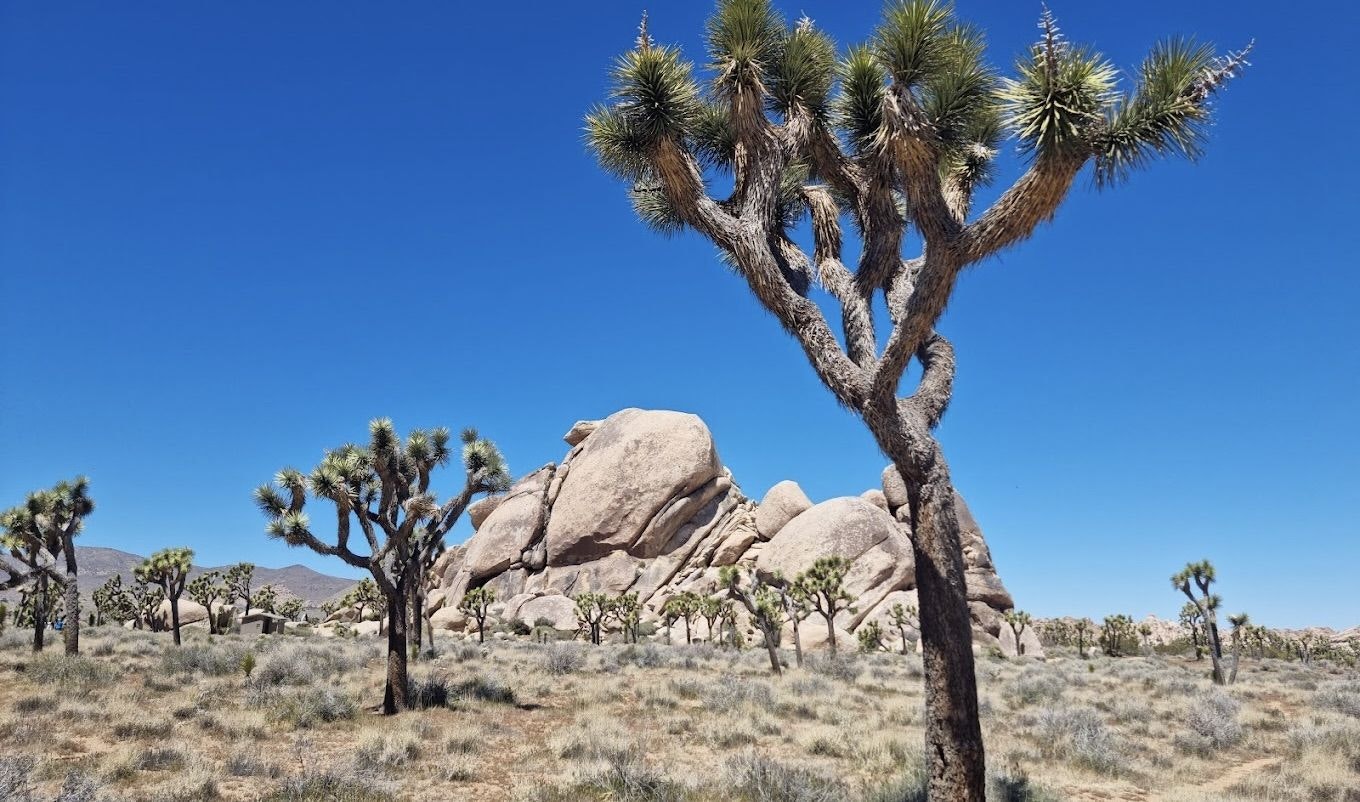
A fun fact about the park's namesake, the Joshua tree, is that it's not a tree at all. It is a species of yucca, a member of the Agave family. Mormon pioneers gave it its name because its branches resembled the biblical figure Joshua raising his arms in prayer.
Another bit of trivia is that these plants grow only in the Mojave Desert, making the park a critical habitat. Additionally, the plant can live for hundreds of years and grow to over 40 feet!
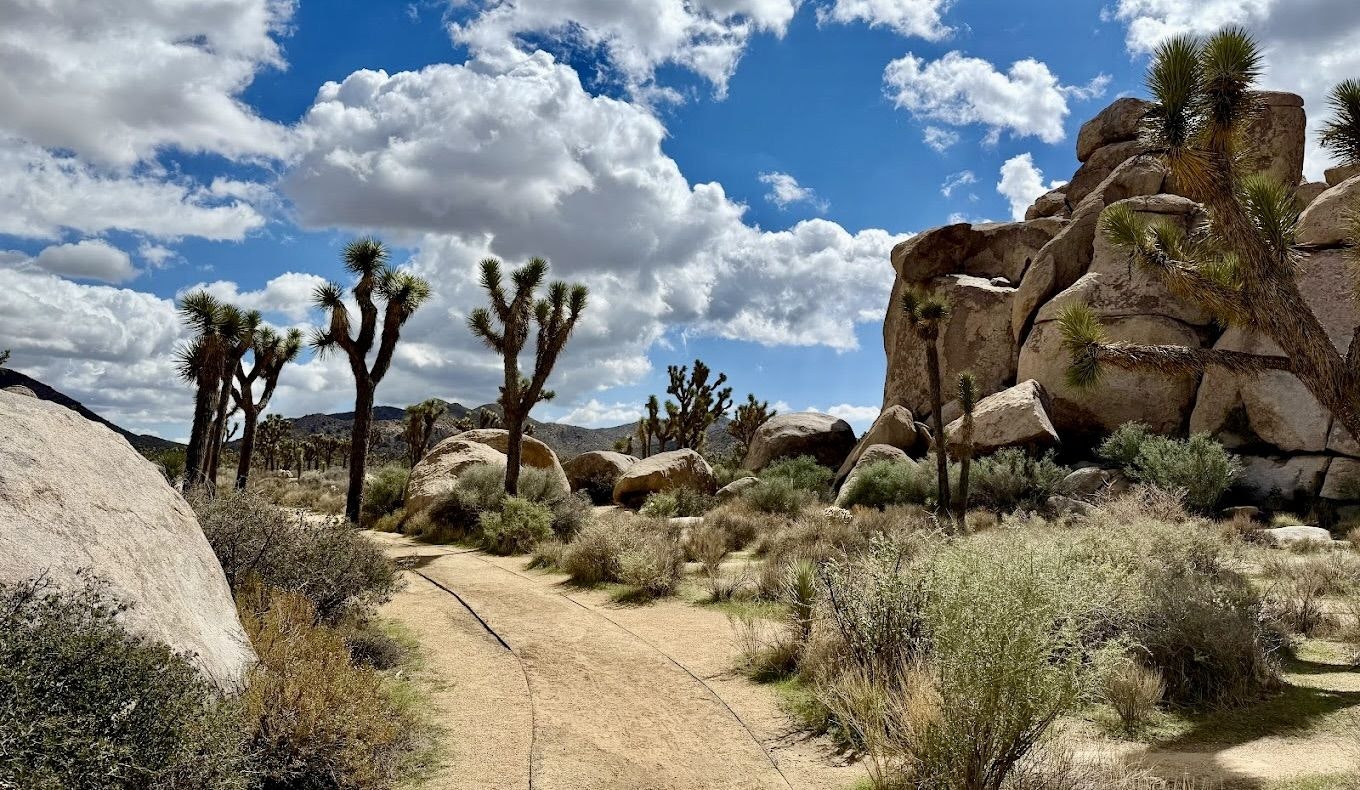
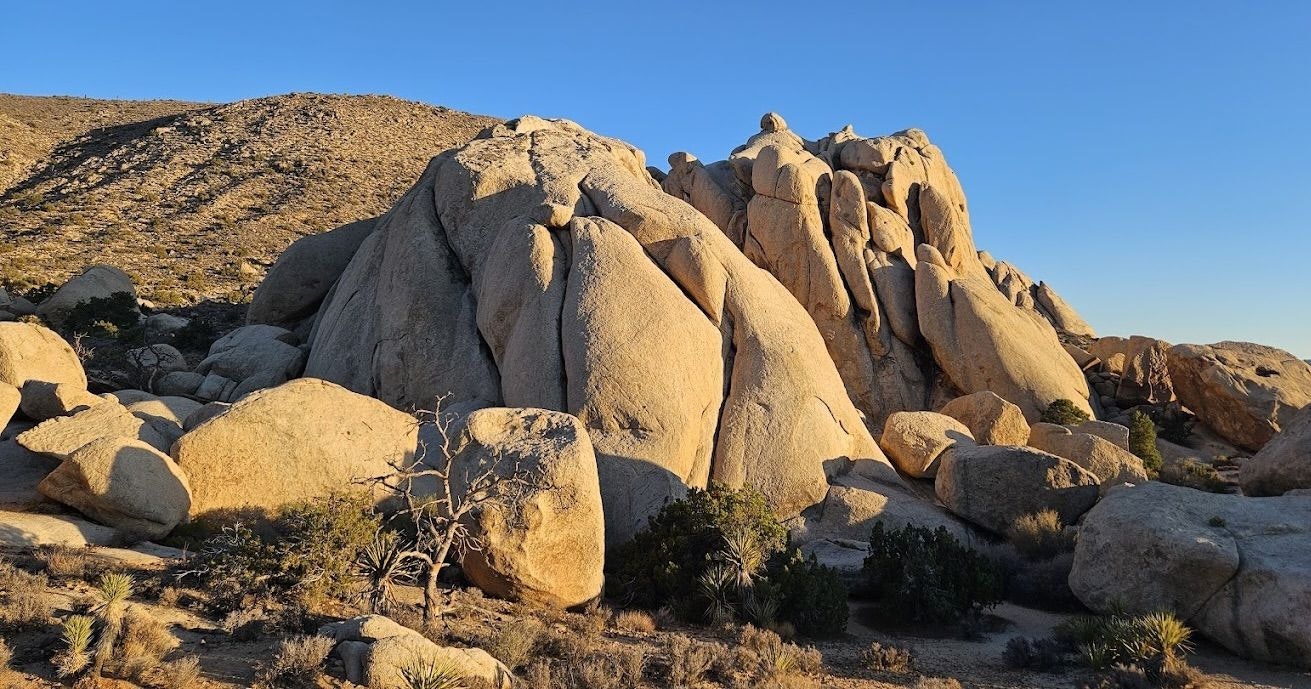
The park's massive granite monoliths and rock piles dominating the landscape are mesmerizing. These formations began as molten lava that cooled beneath the surface. When groundwater percolated through the cracks, it erode the surfact to create the various shapes seen today. Flash floods later washed away the covering ground, exposing the colossal boulders seen today, making Joshua Tree a world-renowned destination for rock climbing.
Joshua Tree is also an International Dark Sky Park. Its remote location and protected status result in minimal light pollution. The Milky Way can stretch across the sky in a brilliant arc, and constellations appear with stunning clarity. If you're an astronomy enthusiast or marvel at the night sky, this is one experience not to be missed! For an immersive experience, sign up for one of the ranger-led night sky programs.
There are over 30 trails to explore, offering something for every level of experience. Hiking Barker Dam is an easy 1.3-mile loop with only 65 feet of elevation, making it perfect for families. For those seeking a challenge, tackle the Ryan Mountain Trail. Ranked "hard" on AllTrails, the 2.8-mile out-and-back ascends 1,062 feet but rewards those who persevere with some of the area's best views.
Visiting Joshua Tree is an entry into a world of strange plants, massive rock formations, and brilliant night skies. The contrast between the two deserts creates a biological variety that is both educational and beautiful.
Whether climbing rocks, hiking trails, or watching the night sky, a visit provides a memorable and rewarding part of any California vacation.
Local Tips
- Cell service is spotty; download maps for offline use before arriving.
- Water is also unavailable, so bring at least 1 gallon per person per day.
- The park has no food, gas, or lodging; stock up in nearby towns.
- Visit during the week or arrive before 9 a.m. on weekends to avoid long lines.