




About
If you’re a scuba diver, you’re well-versed with Belize’s and the world’s most phenomenal dive destinations: the Great Blue Hole.
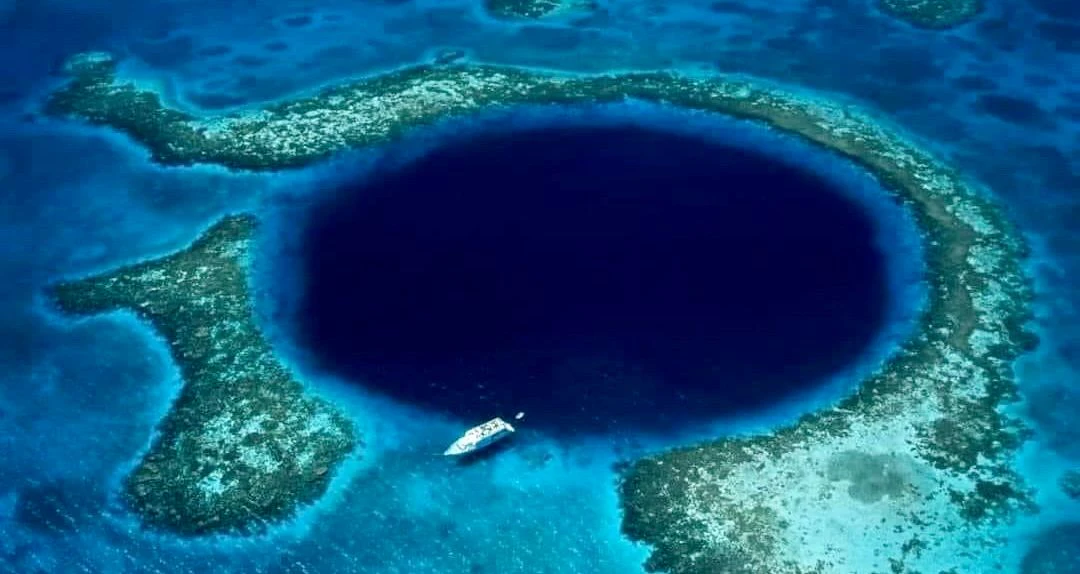
Flying over this natural wonder, it looks like a navy-blue circle dropped into a turquoise sea. Up close, the scale is humbling. To put the Blue Hole into perspective, when Jacques Cousteau explored it aboard his ship, The Calypso, which was 139 feet long, it looked toy-like. But we’re getting ahead of ourselves.
Located on Lighthouse Reef, 56 miles off the coast of Belize, the sinkhole formed during the Quaternary glaciation, when sea levels were much lower than today. Stalactite analysis points to formation phases roughly 153,000, 66,000, 60,000, and 15,000 years ago. Back then, the site was a dry limestone cave system full of rock columns. As the oceans rose again, water flooded the cave, and the Great Blue Hole as we know it took shape.
The world took notice in 1971, when Jacques Cousteau charted its depths for months, ranking it among the top five scuba diving sites on the planet. The French explorer’s endorsement put Belize on the map for divers worldwide.
In 1997, an expedition collected core samples from the floor and documented the cave system. Later in 2018, two submarines descended to map the interior with sonar, a crew that included Fabien Cousteau, Jacques’ grandson, and Richard Branson. They came close to a complete 3-D map of the 1,000-foot-wide hole.
Today, the site enjoys global protection as part of the Belize Barrier Reef Reserve System and as a UNESCO World Heritage Site.
While most visitors come to snorkel and dive, helicopter and airplane tours give you a bird’s-eye view of this watery phenomenon.
Follow along in our next section to learn more about this wonder and how to visit it on your Belize vacation.
Great Blue Hole: Fun Facts & Cool Features
One of the hole’s most unique features is its near-perfect circular shape. The sinkhole measures 1,043 feet across and plunges 407 feet down, giving it its trademark navy color against the surrounding turquoise reef waters.
A strange feature is that around 300 feet, there's a layer of hydrogen sulfide, where the water turns dark and anoxic, devoid of life. The contrast is remarkable: a vibrant reef up top and a still, lifeless void underneath.
While its depths are intimidating, marine life flourishes around the shallow reef edge of the hole. Here, coral and tropical fish thrive, drawing snorkelers and divers alike. You might spot groupers, squirrelfish, angelfish, butterflyfish, reef sharks, and midnight parrotfish gliding through the blue. Additionally, diving along the sloping ledge to the near-vertical cliff offers an otherworldly dive experience.
If you’re a certified diver, consider one of these shops for your Great Blue Hole adventure.
If going underwater isn’t your thing, consider a flight to discover what the Discovery Channel ranks number one on its list of "The 10 Most Amazing Places on Earth." Here are some top-rated and licensed tour companies to consider:
So why make room for the Great Blue Hole on a Belize vacation? It blends natural beauty, deep history, and genuine adventure in one stop. Whether you fly over for the postcard view, snorkel the colorful rim, or dive the famous walls, the experience sticks with you. Pair it with the rest of the barrier reef, and you have a trip worth bragging about for years.
Local Tips
- Boat trips take 2-3 hours one-way and can be bumpy and rough.
- Ensure your aerial tour gives everyone a window seat.
- Snorkelers often prefer Half Moon Caye over the Great Blue Hole.
- Aerial tours offer a better perspective of the sinkhole's size and color.