




About
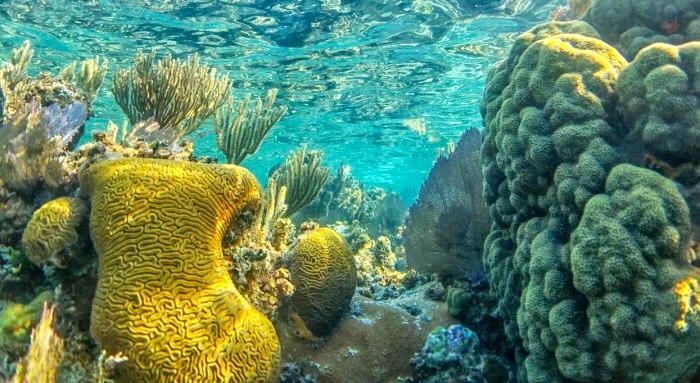
The Belize Barrier Reef is the largest in the Western Hemisphere and the second-largest on Earth, stretching roughly 161 miles along Belize's coast. It forms part of the wider Mesoamerican Barrier Reef System, a maze of lagoon patch reefs, offshore atolls, and fringing reefs. These have captured the curiosity of explorers and scientists for centuries.
Long before scuba divers and oceanographers visited the reef, the Maya used it for fishing between 300 BC and 900 AD. Bacalar Chico served as an important Maya ceremonial center, and traces of that civilization remain at South Water Caye, the Sapodilla Cayes, and the Glover's Reef area.
By the 17th century, the cayes and channels offered shelter to pirates who knew the waters better than any navy. Then came scientists like Charles Darwin, who studied the reef and referenced it in his 1842 work on the origin and evolution of coral reefs. Such documentation helped cement its reputation as the most famous coral reef in the hemisphere.
Famed oceanographer Jacques Cousteau opened the world's eyes to the area in 1971 with his series on the Great Blue Hole. Lastly, in 1996, UNESCO declared the reef a World Heritage Site.
Today, much of it is protected by the Belize Barrier Reef Reserve System, which spans seven marine reserves, 450 cayes, and three atolls across 370 square miles.
While such history and recognition are important, most flock to Belize to snorkel, fish, scuba dive, or explore on an aerial tour.
Join us in our next section as we explore and discover more about this dynamic reef.
Belize Barrier Reef: Fun Facts & Cool Features
As the largest barrier reef in the Western Hemisphere, it offers snorkelers and divers an almost endless playground of coral formations, channels, and crystal-clear water. With so much to explore, you could spend a week in different stretches without seeing the same view twice.
The Great Blue Hole is an iconic landmark in its own right. This massive marine sinkhole sits near Lighthouse Reef and measures about 1,000 feet wide and 400 feet deep. From above, the navy-blue circular hole is in stark contrast to the surrounding turquoise shallows. Below the surface, divers find ancient stalactites and a sense of scale that's hard to describe until you're floating inside it.
Biodiversity is another reason the reef earns its reputation. It shelters more than 70 species of hard coral, 36 species of soft coral, and roughly 500 species of fish, along with 350 mollusks and countless crustaceans, sponges, and marine worms.
The waters host the largest population of West Indian manatees on the planet, as well as sea turtles, sharks, dolphins, and the endangered American crocodile. Scientists believe only about 10% of the species living here have even been identified, so each dive carries a sense of discovery.
The reef has three major provinces, each with its own character: a northern province with 28 miles of shallow-water reefs and a central province with around 6 miles.
Put it all together, and a trip to the Belize Barrier Reef rewards every kind of traveler. From shallow reefs for family-friendly snorkeling, to dive trips to the Great Blue Hole, and eco tours to spot manatees and turtles, there’s something for every age and budget.
Local Tips
- Hire licensed local operators to support conservation.
- April and June feature calmer waters and excellent underwater visibility.
- Use reef-safe sunscreen to protect the coral.
- Bring or rent a waterproof camera to skip pricey on-site options.