




About
One landmark that must be at the top of your itinerary is Turnagain Arm. This narrow waterway branches off Cook Inlet, featuring steep mountains, glacial valleys, wildlife, and one of the world's most powerful tidal systems. It stretches 43 miles, making it the scenic gateway between Anchorage and Girdwood.
The name traces back to 1778, when Captain James Cook sailed these waters in search of the Northwest Passage. When the channel dead-ended, his crew had to "turn again" and head back the way they came. Later, explorer George Vancouver made the label official on his maps, and it has stuck for more than two centuries.
Long before these explorers discovered the tidal inlet, the Dena'ina Athabascan people fished, hunted, and traveled the area. Their connection to Turnagain Arm continues to influence South Central Alaska today.
One of the most impactful phenomena at this inlet was the 1964 Good Friday earthquake. It registered at magnitude 9.2 and remains the strongest quake ever recorded in North America. Land along Turnagain Arm dropped several feet, flooding forests with saltwater and creating the ghostly stands of dead trees still visible near Portage. That event transformed the landscape and left an indelible mark you can witness firsthand.
While you can hike or paddle its waters, the Seward Highway offers a scenic drive alongside the inlet. Recognized as a National Scenic Byway and All-American Road, it offers turnouts, trailheads, and viewpoints showcasing wildlife, waterfalls, and glaciers.
The route connects visitors to a landscape shaped by tides, tectonics, and centuries of human history, making it a highlight of any trip through the region.
Turnagain Arm: Fun Facts & Cool Features
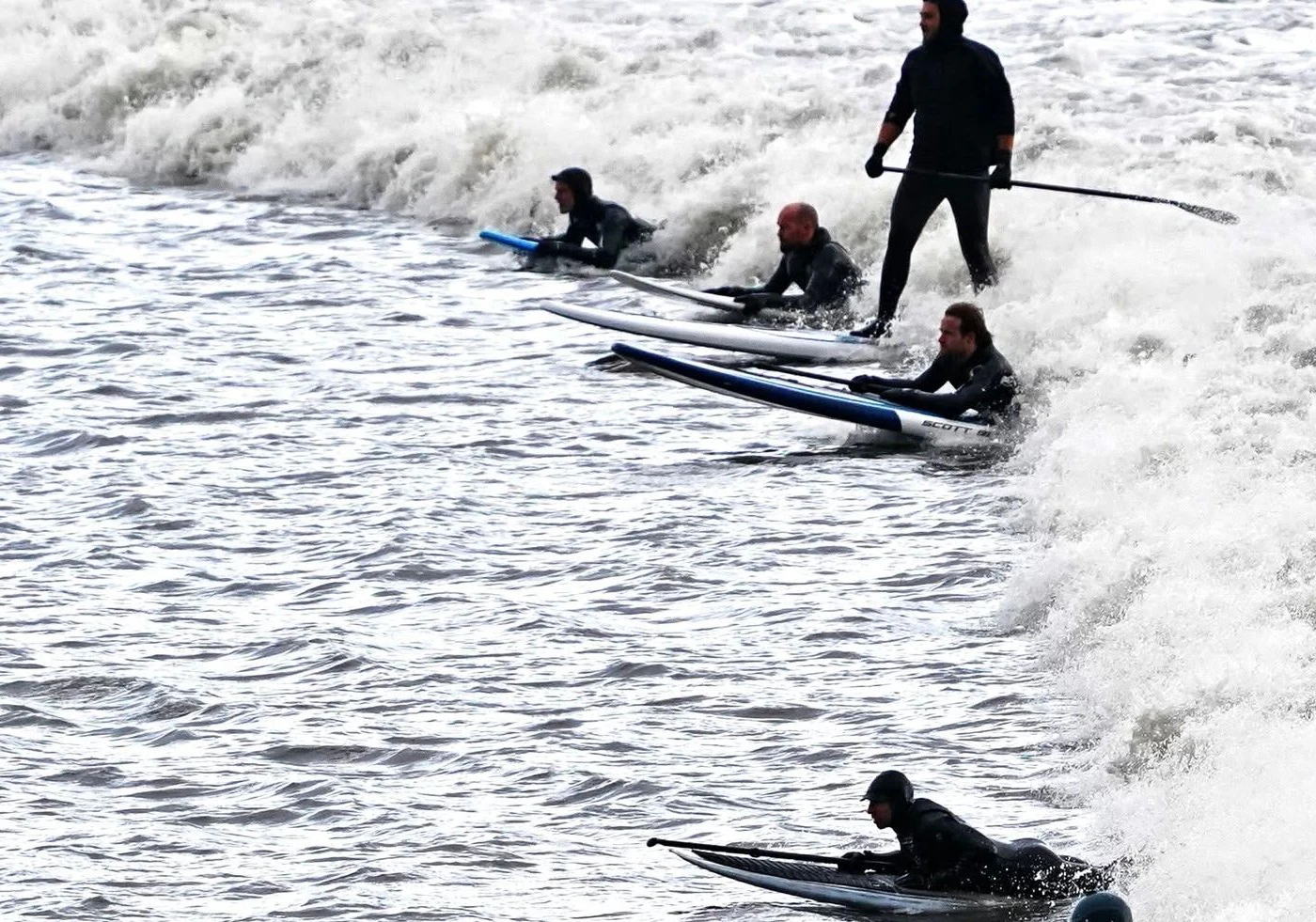
One site you have to see firsthand is the Bore Tide! When the incoming tide rushes back into Turnagain Arm’s narrow channel, it forms a single wave that can reach 6-10’ and travel 15 mph! Surfers and paddleboarders flock here to ride this rare phenomenon, and spectators gather at turnouts like Beluga Point and Bird Ridge to watch the wall of water roll past.
Whether you visit by car or kayak, never walk on the mud flats! These become like quicksand, trapping people who subsequently drown in the Bore Tide.
Wildlife adds another layer of wonder. Beluga whales chase salmon into the arm during summer months, while Dall sheep cling to the cliffs above the highway. Bald eagles, moose, and the occasional bear round out the cast, turning a simple drive into a wildlife-watching outing.
To witness these animals up close, visit the Alaska Wildlife Conservation Center to see rescued bears, bison, and musk oxen.
Several hiking trails will appeal to those who prefer to explore on foot. An easy trek for all ages and abilities is the Turnagain Arm View Loop. The 1.1-mile loop offers scenic views, sandy footing, and minimal climbing.
Bird Ridge Trail is in the Chugach State Park and offers a challenging yet rewarding out-and-back hike. While it's rated "hard" by AllTrails for gaining 3,244 feet in elevation in 2 miles, the summit's breathtaking views are worth the heart-pounding effort!
Another perk to visiting is the ever-changing landscape. Sign up for a voyage to Portage Glacier that lies at the far end of the arm. The boat ride puts you front and center to this 10-story glacier, making for a once-in-a-lifetime experience.
As you can see, Turnagain Arm offers something for every interest. Here, you can chase Bore Tides, spot belugas, hike coastal trails, see glaciers, and connect with nature and wildlife. Such variety makes this landmark a must on your Girdwood getaway.
Local Tips
- Bore Tide schedules are online, making it easy to coordinate into your itinerary.
- Beluga Point offers the best place to spot whales in the summer.
- Pack layers, since coastal winds are cool even on sunny days.
- Fill up your gas tank in Girdwood before taking longer drives.