





About
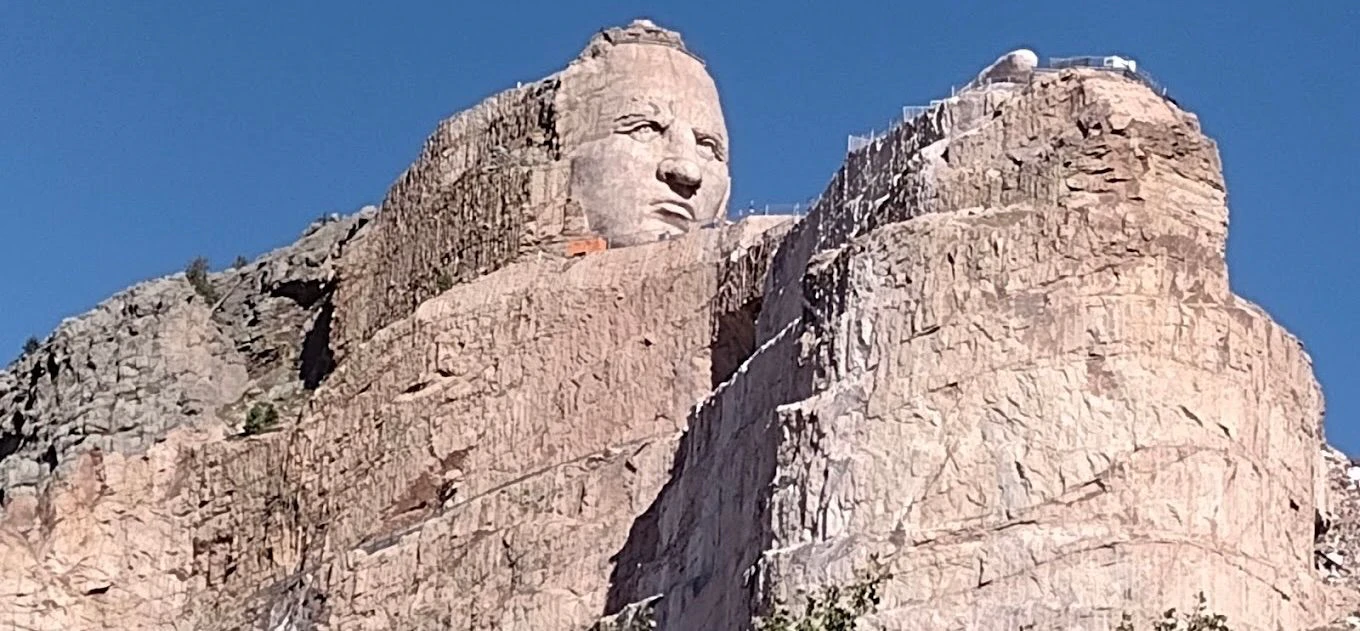
Although it’s a work in progress, the Crazy Horse Memorial® is destined to be the world's largest sculpture.
Crazy Horse was an Oglala Lakota warrior who led a coalition of Lakota, Cheyenne, and Arapaho fighters against the U.S. Army at the Battle of Little Bighorn in Montana. Forever known as Custer's Last Stand, General Custer and his soldiers perished that day in 1876, making it the most famous moment in Native American history.
The finished carving will measure 641 feet long and 563 feet high, dimensions that dwarf nearby Mount Rushmore National Memorial. We’ll look at this in more detail in our next section.
The story starts in 1939, when Lakota Chief Henry Standing Bear reached out to sculptor Korczak Ziolkowski. His goal was clear. Show the world that Native Americans had great heroes too.
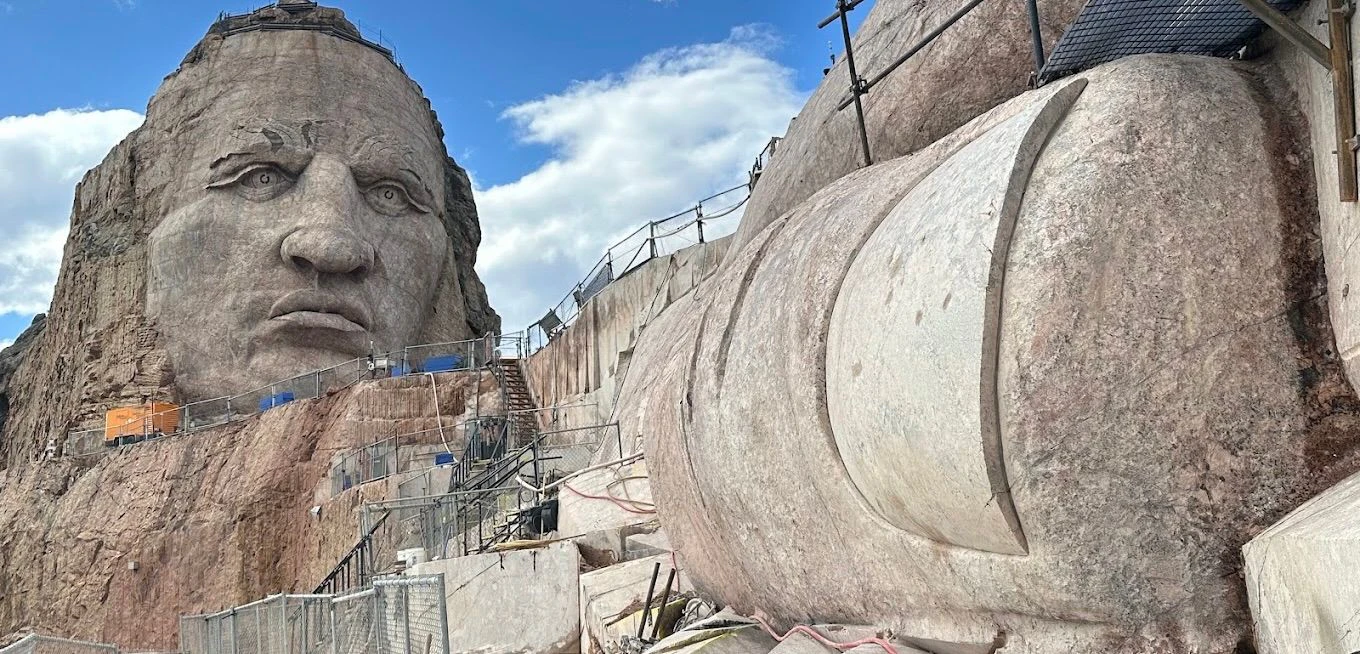
Ziolkowski began in 1948 with a dedication blast and worked until he died in 1982, when his wife, Ruth, took the reins. She shifted focus to completing the face, which was dedicated in 1998. Today, the couple’s grandson, Dr. Caleb Ziolkowski, oversees the sculpting process as the Chief Mountain Officer.
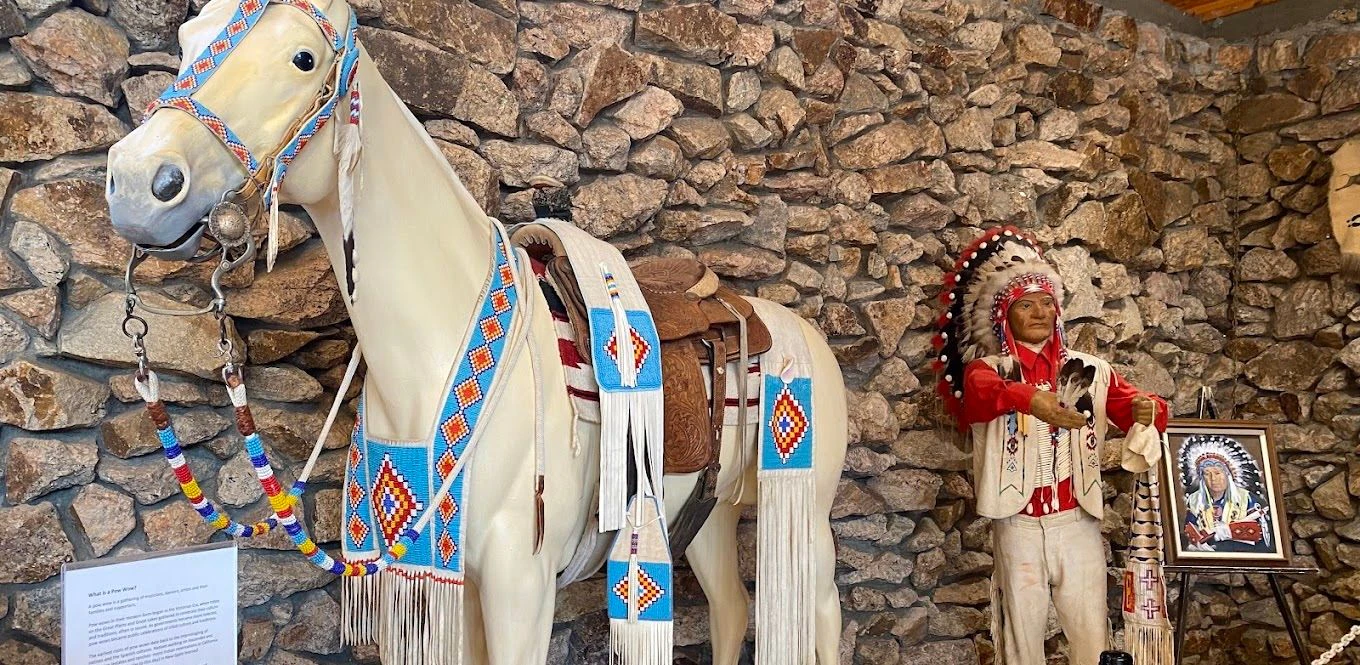
In addition to the stone mountain, the Indian Museum of North America and the Native American Educational and Cultural Center share the stories, art, and traditions of Native peoples. Live events, tours, and demonstrations enrich and enlighten.
Nearby is Custer State Park, making it easy to combine multiple activities in one day. And when the gang needs food and drinks, the Laughing Water Restaurant is onsite, offering Native American-inspired fare like bison stew with fry bread. Just down the road in Custer is Skogen Kitchen, one of South Dakota’s top-rated dining spots. With so many food options, you’ll find something for everyone!
Whether you want to learn about Native American history or gaze at the face of Crazy Horse, visiting will delight young and old alike.
Crazy Horse Memorial®: Fun Facts & Cool Features
As we stated, upon completion, the monument will be the largest sculpture in the world. To put this in perspective, the memorial's face will be large enough to contain the four faces from Mount Rushmore.
The Face-to-Face experience is the only means offered daily that lets you get close to the stone face. Note that the tour schedule changes daily, so check this website link for hours and costs to coordinate with your visit.
Another way to get an up-close experience is the Volksmarch offered in spring and fall. The 5K or round-trip 10K is the only time the public can have access to the site.
Last but not least is the Bus to Base tour that transports you to the bottom of the mountain for a closer view. Keep in mind that tickets are first-come, first-served daily and that rides begin when the complex opens and run until an hour before closing. The tour lasts 25 minutes and costs $5 a person, while those 6 and under are free.
The Indian Museum of North America offers an immersive experience, where you’re encouraged to slow down and take in clothing, tools, weapons, and artwork from tribes across the continent. Rotating exhibits keep the displays fresh, so there's often something new to see with each trip.
During the summer, the Legends in Light laser show projects images onto the mountain face. Along with narration, the 30-minute show is a visual storytelling adventure about Crazy Horse, Native American culture, and the history of the memorial.
Crazy Horse Memorial® connects you with the past in a way few places can, making it a must on your Black Hills getaway.
Local Tips
- Arrive early to beat the crowds.
- Plan your summer visit to take in the laser show after sunset.
- Bring a jacket, since Black Hills evenings turn cool even in summer.
- Set aside at least two hours to explore the museums and cultural center.